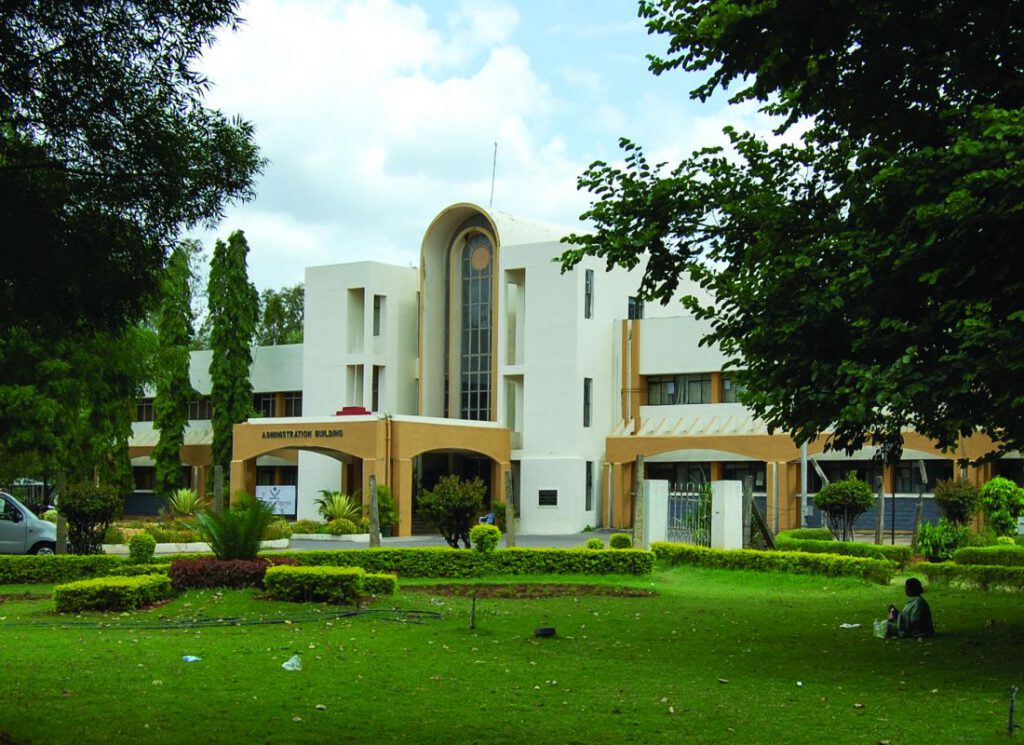
West Virginia School Saves Millions with 50-Year Network

Key Features of the Network
Converged Data and Power: High-speed fiber plus fault-managed DC power in a single hybrid cable.
Future-Ready: Built to support next-generation technologies, making it adaptable for future needs.
Distributed Edge Architecture: Uses a hub-and-spoke model with Edge IDFs up to 600 meters from the main HEADEND, saving space and costs.
Cost & Energy Savings: Achieves significant savings in construction, energy (up to 30%), and operational costs compared to traditional systems.
In 2016, historic floods devastated the heart of Richwood, West Virginia, wiping out two vital educational anchors: Richwood High School and Richwood Middle School. Out of the wreckage, Nicholas County Schools faced the daunting challenge of not just rebuilding, but constructing a state-of-the-art 110,000 square-foot K-12 academic complex. And they had to do it all while battling budget constraints typical of a rural district.
The new educational complex needed a technology infrastructure that would prepare students for the digital future, last for the next half-century, and not break the bank. Most experts would call this an impossible dream, but not Chris Hanshaw. As Nicholas County Board of Education’s technology director and facilities manager, Hanshaw saw this as his opening to be boldly innovative.
Seizing the unique opportunity to design a network from the ground up, Hanshaw didn’t just replace the old. Rather, he embraced a revolutionary architecture that fundamentally rethinks network design to achieve the unthinkable at the new Richwood Academic Complex. He did so by implementing a 50-year-ready IT network that is not only robustly supporting today’s technology but is ready for tomorrow’s demands. What’s more, he was able to generate millions in savings on construction, energy consumption, and long-term operational costs.
Rethinking Network Design
“I knew there had to be a better way to deploy the network that would keep us from having to constantly upgrade equipment to meet the growing demands for high-speed connectivity and power,” says Hanshaw. “That better way comes from a company called Sinclair Digital, based in Fort Worth, Texas. When I came across their AGILE-CORE Distributed Edge Architecture, I saw an opportunity for us to deliver the technology that our students need to succeed and thrive in the digital world. And we did so while increasing power, saving space, and lowering costs.”
Distributed Edge Architecture is a modular, plug-and-play AGILE-CORE solution that distributes fiber optic connectivity and safe, low-voltage power throughout the school building. The result is a highly scalable, future-proof IT network infrastructure that offers an efficient and cost-effective alternative to traditional IT architecture.
Conventional network design uses intermediate distribution frame (IDF) closets that are equipped with switches, AC power, and cooling. These closets provide data and power over Ethernet (PoE) to endpoint devices via traditional copper twisted-pair cabling. The drawback is that the 100-meter limitation of these traditional copper cables requires an IDF every 10,000 square feet, resulting in large cable bundles that run through ceiling pathways to connect devices in classrooms and other educational spaces. Not only are these long cable runs difficult to deploy, but moves, additions, and changes to the network are highly disruptive, often delaying technology upgrades to when school is not in session.
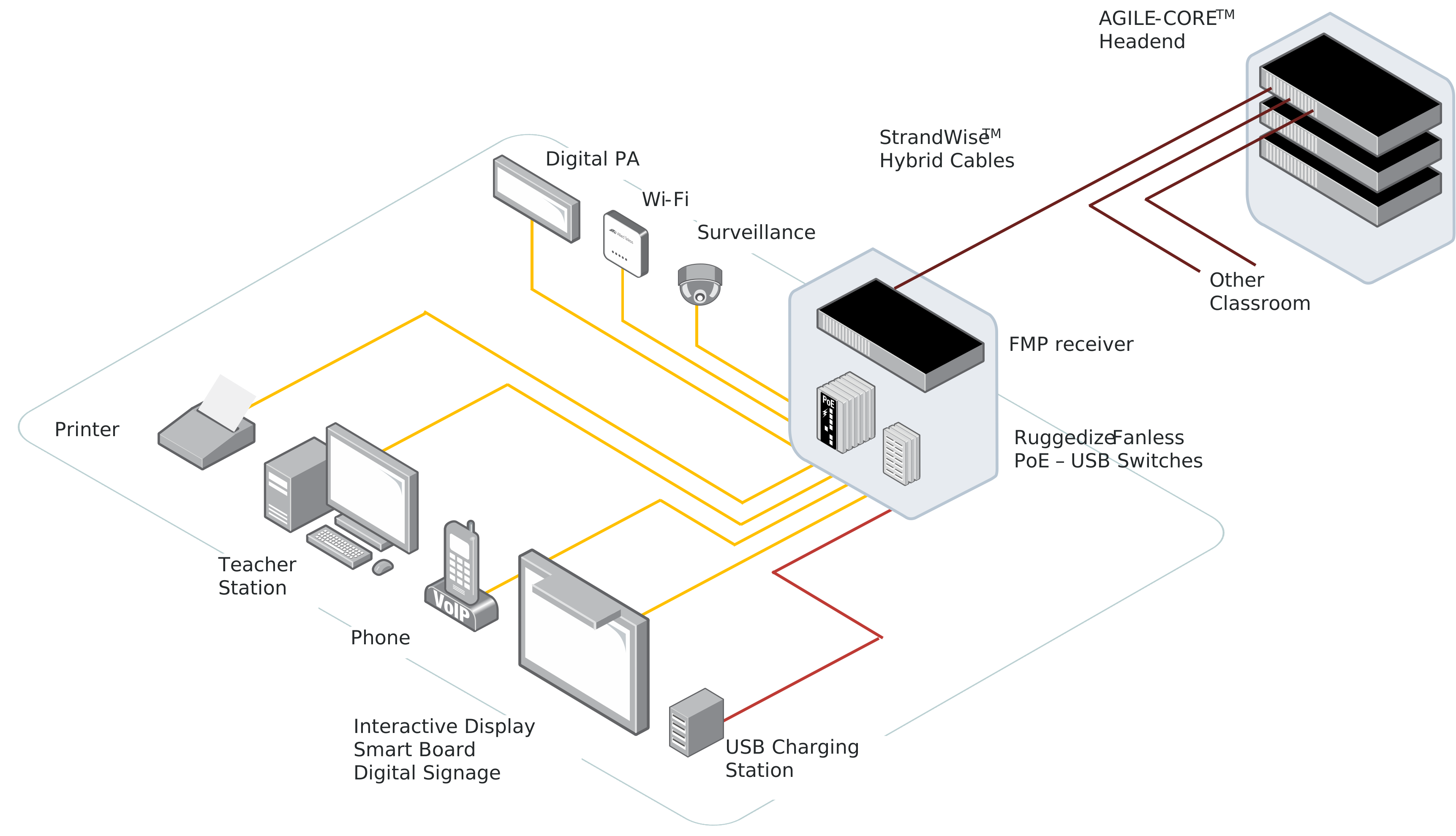
In contrast, Sinclair Digital’s AGILE-CORE system employs a hub-and-spoke design with StrandWise hybrid cables that distribute power and data from a centralized HEADEND in a main distribution facility (MDF) out to BITS (building infrastructure terminal system) Edge IDFs. The AGILE-CORE HEADEND houses switches and servers for network support, centralized management and control, and other network functionality.
Each Edge IDF comprises a prefabricated ceiling-mounted enclosure that includes all the necessary equipment to deliver high-bandwidth data and low-voltage PoE or USB power to nearby spaces such as classrooms, libraries, and offices. Endpoint devices can be easily connected to the Edge IDFs via short copper cables to meet a variety of technology needs, including Wi-Fi, audiovisual (AV) systems, video surveillance, USB-C charging, public address (PA) systems, IoT sensors, and more.
Harnessing Cleaner, Safer Power
One of the most innovative features of AGILE-CORE Distributed Edge Architecture is the use of intelligent fault managed power (FMP). Adopted as Class 4 power in the 2023 National Electric Code (NEC), FMP efficiently delivers safe DC power over greater distances using transmitters and remote receivers to intelligently detect faults, providing superior protection from electric shock and fire initiation.
At the HEADEND, the AGILE-CORE system converts AC grid power to this innovative, safe DC power. The power then converges with data over the StrandWise hybrid cable, which combines multiple pairs of copper conductors for power and fiber strands for data in a single, plenum-rated sheath. This streamlined solution saves pathway space and distributes data and power in a single cable pull to Edge IDFs up to 600 meters away.
The AGILE-CORE system also can accept direct DC power from renewable energy sources before converting it to FMP, providing Nicholas County Schools with the opportunity to leverage solar power in the future for increased energy savings and sustainability.
By distributing safe DC power throughout a school, the AGILE-CORE system eliminates the bulk of AC to-DC conversion required to power electronics. AC-to-DC conversion can result in significant power losses of up to 30 percent and introduce distortions into power distribution systems.
“Power has been one of our biggest challenges, and we’ve had to replace more equipment due to power demand rather than the need for speed. Plus, AC-to-DC power conversion creates dirty power that can cause network equipment to fail,” explains Hanshaw. “With AGILE-CORE’s fault managed power, everybody is safer, there is no risk of fire, and we have clean, reliable, and efficient DC power that doesn’t degrade our equipment, significantly reducing the frequency of equipment upgrades.”
Allied Telesis Is the Perfect Fit for AGILE-CORE
Allied Telesis equipment and technology is at the very heart of the AGILE-CORE network. At the network core of the HEADEND in the MDF is a stackable set of Allied Telesis x950 Layer 3 managed switches with SFPs (small form-factor pluggables). The SFP is a component that allows for the connection of various fiber optic modules to the switch. This enables the switch to convert Ethernet signals to optical signals, allowing for the transmission of data over fiber optic networks. The SFP slot is designed to be hot-swappable, meaning that it can be replaced without shutting down the switch. The SFP also supports PoE, allowing remote devices to receive power through the fiber optic cable. And critically, these Allied Telesis switches also support FMP to move data and power from the MDF out to the Edge IDFs.
Also in the MDF is the Allied Telesis Vista Manager VST-APL network appliance. Vista Manager is a unified network management platform for monitoring, managing, and automating wired and wireless networks. In addition to fully managing all Allied Telesis equipment, Vista Manager monitors third-party devices via SNMP and includes security features to create a self-defending network with automated threat response.
In the ceiling plane, the school district has installed forty BITS Edge IDFs, each containing two Allied Telesis IE220 10 Gigabit edge-hardened industrial switches. The school typically needs five data drops per classroom. With two switches in each Edge IDF, there are 16 ports to choose from, offering, for example, five for one classroom, five for another, and six spare ports to evolve and grow over the lifetime of the school.
Allied Telesis wireless access points are throughout the school building. And if something new needs to be added to the classroom—say, cameras or some sort of IoT sensor—it simply requires a 10-meter cable from the IDF as opposed to a 60-meter run of Cat6A cabling down the corridor. It speaks to the agility of this solution, hence the name AGILE-CORE, and the flexibility of this architecture to protect the value of the 50-year network and to be ready to support edge compute, edge AI, or whatever the school district chooses to put on the edge.
The fact that these switches are ruggedized is critical to the lifespan of the network. They are convection-cooled, so they don’t make any noise, which is essential for their proximity to the classrooms. They also support high ambient temperatures, making them more suitable for their location in the ceiling plane. They are more durable, requiring fewer refreshes than regular switches.
Lower Cost Over the Lifetime of the Network
“I believe our infrastructure is a 50-year network,” says Hanshaw. “We have the power and cabling in place to support a network for decades. Inevitably, we will have to change equipment at some point, but by using the rugged Allied Telesis switches, we have reduced the number of refreshes we would ordinarily have to make. In my opinion, we’ve eliminated two hardware refresh cycles. Instead of replacements every five to seven years, we stretched that out to 15 years, at least.”
Hanshaw personally selected Allied Telesis over other brands because this hardware fits the school district’s needs at a better cost than any other comparable switch on the market. “They put out more power and more speed in a smaller box than everybody else at this point in time,” he says. “We picked them because the cost was on point with better hardware than the other vendors.”
“The total cost of ownership for our network is so much lower than that of a legacy network architecture,” Hanshaw claims. “If you don’t use the type of topology we use, you’re going to throw money at the infrastructure every five to seven years. I’m going to have a net zero network in ten years. I think we can just let it roll for 15 years.”
Network Management and Maintenance Made Simple
The school district does all its own network maintenance, management, and support in-house. Allied Telesis Vista Manager provides visibility and facilitates the ability to monitor and manage the whole network—even those elements from third parties. “It was a bit of a learning curve, but once we got everything set up, we found it meets our needs and does everything we need it to do,” says Hanshaw. Vista Manager also enables remote maintenance of equipment when necessary.
He adds that both Sinclair Digital and Allied Telesis were very supportive in deploying the network and bringing the in-house team up to self-sufficiency. “We really appreciate all the support they gave us in the beginning, and we know we can call them at any time if we have questions.”
Hanshaw claims the system as a whole makes managing and maintaining the network easier. “There’s a process to maintaining and refreshing switches, and it can be time-consuming and costly,” he says. “If there’s a network outage, we have to pay for labor and hardware. Purchasing in the public sector requires a bid, so there’s that complication. But the rugged switches give us a high mean time between failure, which goes right back to our lower TCO. This network saves me two refresh cycles, which means we don’t have to take the network down, we don’t have to pay overtime for a tech to work on a weekend. We gain uptime, and that’s an aspect of cost of ownership that’s hard to measure, but it’s certainly a benefit.” He estimates that this network delivers more than $1 million in savings compared to a conventional switched network design.
A Future of Opportunities
The network is expected to bring tremendous opportunities to the students that a legacy network wouldn’t. “I’m working with people in the AI world to try to become the first school where processing happens in the school, rather than in the cloud. Because of this network, I have power to each location and I can put IDF boxes in each ceiling,” according to Hanshaw. “Having the advanced network gives us this opportunity. It definitely brings speed and resiliency to our current needs, but it also allows me to draw attention and bring in future opportunities to directly benefit the students.”
With this new network, Nicholas County Schools has done more than simply recover from a natural disaster. The district has positioned itself – and more importantly, its students – for a future filled with opportunities.
Key Data Points for the Richwood Academic Complex
- One HEADEND in the MDF
- 40 BITS Edge IDFs containing two edge-hardened 8-port switches with 10G throughput, each with four 802.3bt and four 802.3at switch ports
- 58 wireless access points
- 40 VoIP phones
- 53 multimedia interactive displays
- 102 cameras
- 12 access control system boards
- 85 data jacks for printers, copiers, computers, etc.
- 252 digital public address system visual display/clocks, some with 2-way communications
- 78 panic buttons