
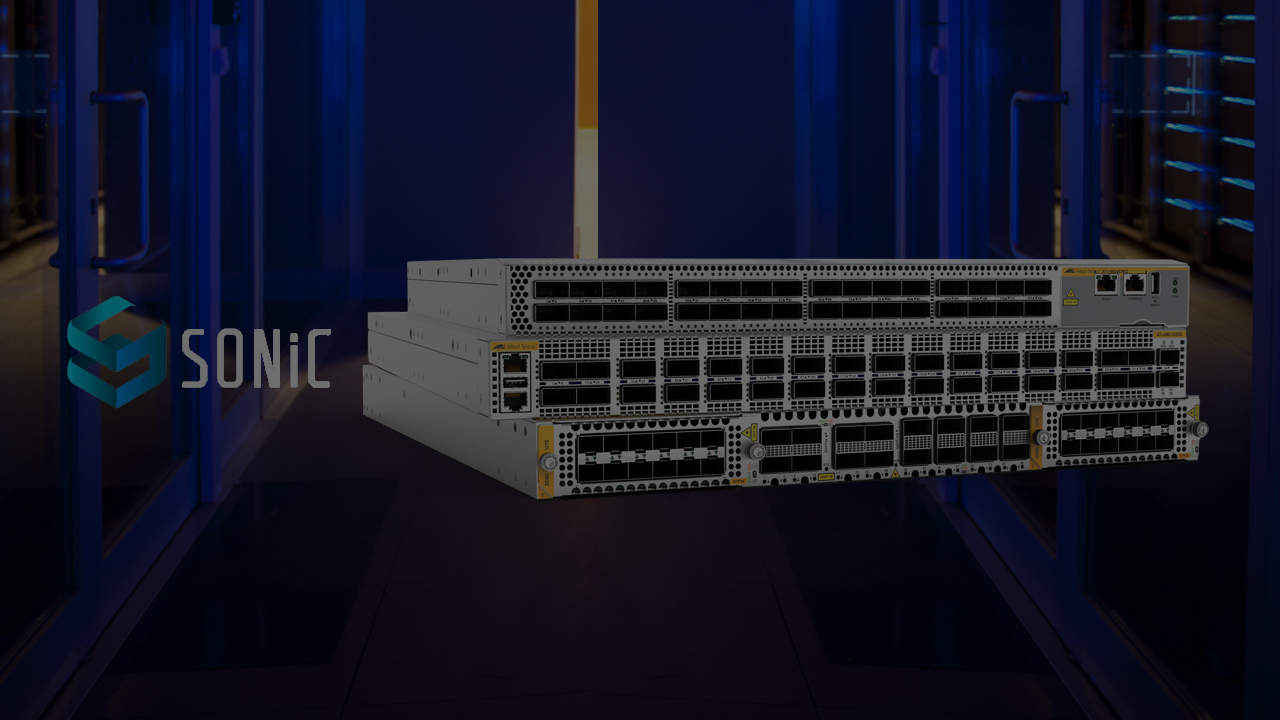
Allied Telesis is introducing support for Community SONiC (Software for Open Networking in the Cloud) on its x980 series data center switches, providing customers with an additional network operating system option for high-performance environments.
Expanding Software Choice
Community SONiC is an open-source network operating system that has seen adoption in large-scale data center environments. It allows network operators to separate software from hardware, enabling greater flexibility in how networks are deployed and managed.
With the addition of community SONiC support on the x980 series, Allied Telesis customers can choose between traditional integrated solutions and an open networking approach, depending on their operational requirements.
Disaggregation in Practice
One of the key concepts behind community SONiC is disaggregation—the separation of network hardware and software into independent components that can be selected, deployed, and managed separately.
In traditional networking models, switching hardware and the operating system are tightly coupled and delivered as a single, integrated solution. While this simplifies procurement and support, it can limit flexibility in how networks evolve over time.
Disaggregation changes this model by allowing:
- Independent software selection, enabling operators to choose an operating system such as community SONiC based on functionality or operational fit
- Hardware standardization, where switching platforms like the x980 can be deployed consistently across environments
- Faster innovation cycles, as software can be updated or extended without requiring changes to the underlying hardware
- Greater control over the network stack, including the ability to integrate custom tools, telemetry, or automation frameworks
By supporting community SONiC on the x980 series, Allied Telesis is enabling customers to adopt disaggregated networking where it makes sense, while still offering a validated and supported hardware platform.
x980 Platform Overview
The x980 series is designed for data center and aggregation use cases, supporting high-density 100 and 400GbE interfaces.
Running community SONiC on this hardware provides an option to combine an open, modular software stack with a switching platform designed for consistent performance.
Operational Considerations
Community SONiC’s modular architecture supports the use of containerized services and integration with common automation frameworks. This can be useful for organizations adopting DevOps practices or looking to standardize tooling across compute and network infrastructure.
Use Cases
Community SONiC on the x980 series may be relevant in scenarios such as:
- Data center environments seeking greater control over network software
- Organizations adopting disaggregated infrastructure models
- Environments standardizing on open-source tooling and automation
- High-performance computing or analytics workloads
- Hybrid or multi-vendor network deployments
Looking Ahead
The addition of community SONiC support on the x980 series reflects a broader industry shift toward more flexible and open networking architectures. By supporting both disaggregated and traditional approaches, Allied Telesis aims to give customers the ability to choose the model that best aligns with their operational preferences and long-term strategy.
Accessing SONiC
Community SONiC releases and associated documentation for the x980 are currently accessible through Allied Telesis’s support portal. We also expect compatible releases to be accessible through the SONiC open community portal in the near future.
Similar to the operating model of other leading open community projects, Allied Telesis will facilitate software maintenance and support of releases with the SONiC community.
